London has more good restaurants than anyone can eat through and a great many more that are merely expensive. The gap between the two is not price, and it is rarely the star rating. It is usually whether the kitchen has something to say.
This is not a ranking of the hundred best. It is the shorter, more useful version of where to eat in London: what the critics actually rated this year, and then where to go depending on what the meal is for.
What the critics rated in 2026
Camille, the Borough bistro, took the top spot in The 50 Best Restaurants in London 2026, Time Out’s editors’ list, where it is filed as French and given five stars out of five. Elliot Hashtroudi’s cooking is French in bones and unfussy in execution, and it is the rare restaurant where the hype and the plate line up. Small, so book properly ahead.
Tiella came second, and it is in Bethnal Green rather than Hackney, which is how Time Out lists it and worth getting right if you are walking there. An Italian trattoria doing the thing that sounds simple and almost nobody does well, which is a short menu cooked precisely.
St John in Farringdon took third, which it has been quietly deserving for close to thirty years. Nose-to-tail, whitewashed walls, bone marrow and parsley salad, and a bakery attached. If you eat one meal in London that explains modern British cooking, eat this one.
Worth adding: Mountain in Soho, an extension of Brat’s open-fire approach applied to Basque and Spanish cooking, and Tavern in Shoreditch, which had a very good year with the critics.
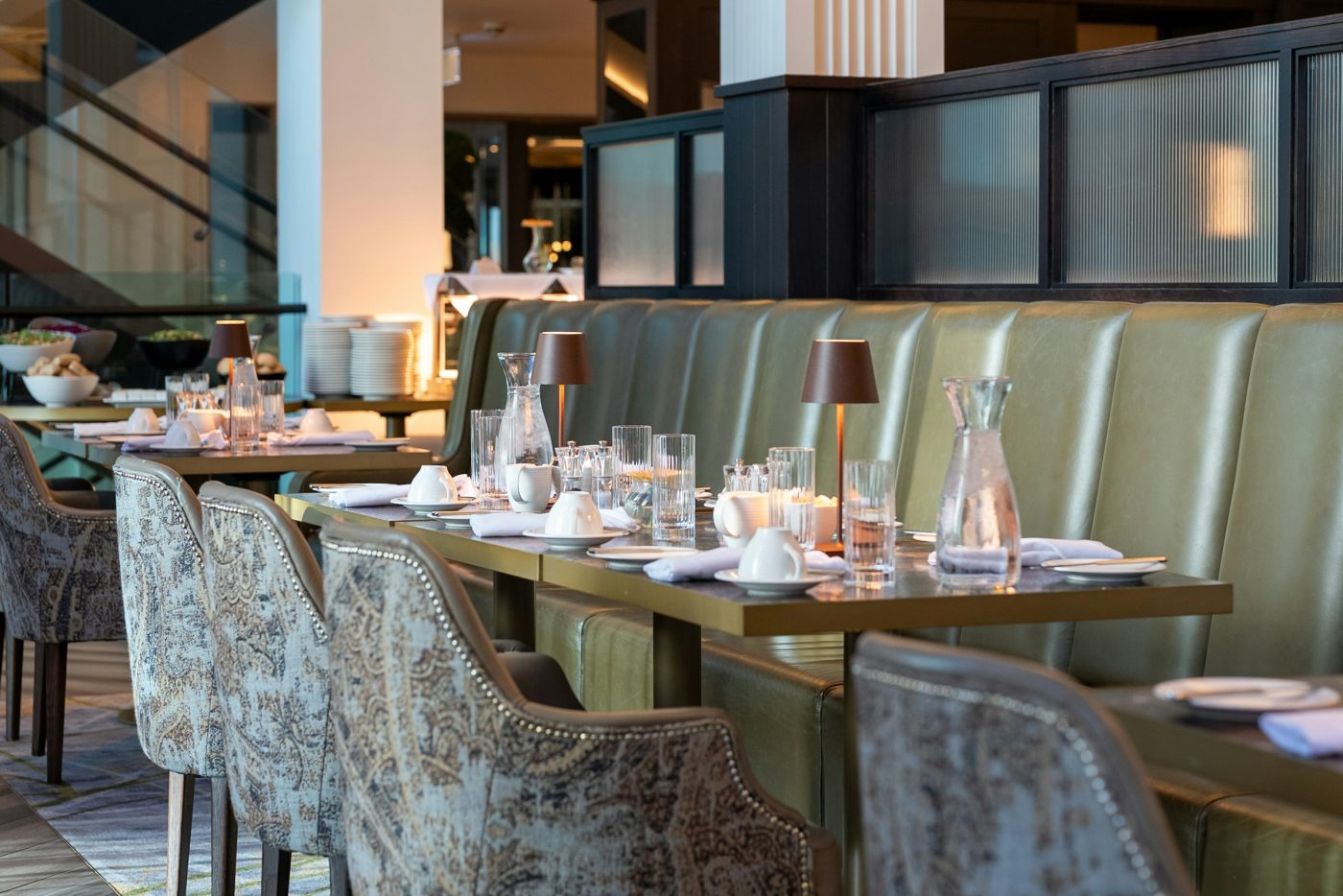
And Fallow, at 52 Haymarket in St James’s, which Google now puts in its own top three for this search and which almost no list covers on the thing that makes it genuinely useful: it is open from 07:30 in the morning until 11 at night, Monday to Friday. Fifteen and a half hours.
That is worth more than another adjective. A restaurant reviewed this well is normally a dinner you plan a month out. Fallow is also breakfast, an early lunch, a late one, and a table at half past four when nothing else is serving. Saturday runs 9am to 11pm and Sunday 11.30am to 10pm. If you cannot get the dinner, take the hour nobody else wants.
If the meal has to impress
The top of London’s dining is genuinely world class and priced accordingly. Core by Clare Smyth in Notting Hill holds three Michelin stars, confirmed on the guide’s own London listing, which makes it about as technically accomplished as a table gets in this city.
Worth knowing where it sits: London has only six three-star restaurants, out of ten in the whole United Kingdom, and Notting Hill has two of them, Core and The Ledbury, within walking distance of each other. No other neighbourhood in the city has more than one.
Our guide to London’s Michelin starred restaurants covers the other five three-star rooms, what the tiers actually mean, and the lunch trick that halves the price of eating in them.
If you want to eat well without ceremony
This is where London is genuinely unmatched. The city’s strength is not its palaces, it is the density of small restaurants doing one thing seriously.
Soho alone holds more of these per street than most cities manage in total: Quo Vadis, Koya Ko, Osteria Vibrato and a dozen others within a few minutes of each other. Most of the best do not take bookings for two, which is why Soho has so many good bars: you drink while you wait.
Café Cecilia in Hackney and the wider east London scene is where a lot of the interesting cooking has moved, and prices are meaningfully lower than the centre for the same ambition.
If you are eating alone
London is unusually good at this and it is worth knowing. Counter seating is normal, not a consolation prize, and at several of the best restaurants it is the better seat: you can walk in without a booking, you watch the kitchen, and the service is often warmer. St John, Koya and most of the Soho small plates places all work this way.
Booking, which is the whole game
The booking rule decides more London evenings than the menu does. Our index of who takes walk ins sets out what 154 venues actually publish about getting in, and the thirteen that hold tables back for walk ins on purpose.
The good places are full by Wednesday for the weekend. This is the single most useful sentence in this article. Book before you fly.
Know when the book opens. Most in-demand restaurants release tables on a rolling window, often a month ahead at a fixed time. The popular ones go in minutes.
Weekday lunch is the soft spot. Tuesday and Wednesday lunchtimes are available almost everywhere and frequently cheaper.
Walk-ins exist. A significant share of London’s best restaurants keep counter seats or a bar for walk-ins. Arrive when they open or late, not at eight.
Take the cancellation list. Tables free up in the final week far more often than people expect.
The cuisine guides, in detail
- Seafood The raw bar and the kitchen keep different hours, and one publishes the gap
- Fish and chips London’s oldest chip shop asks for an hour before closing for a table
- Tapas The part of the room you sit in decides whether you were allowed to book it
- French One of the best rooms takes telephone calls for two hours a day
- Greek Two restaurants four doors apart cancel a late table five minutes differently
- Japanese Where the booking rules matter more than the ranking
- Korean Not one of the three in the Michelin Guide is in central London
- Vietnamese Almost all of it is on one road, and one place publishes no hours at all
- Turkish One street holds most of it, and a name on every list has closed
By neighbourhood
The city wide list above is the top of the pile. If you already know where you are going to be, these go deeper on one place each, with the booking rules and the closing times that decide the evening:
King’s Cross, where most people have a train and the district is a ten minute walk from the station. Canary Wharf, which inverts London’s rule and is easier at the weekend. Covent Garden, where the good rooms are one street off the Piazza. Marylebone, Notting Hill, which holds two of London’s six three star restaurants, Mayfair, which holds three, and Shoreditch. London Bridge, where six rooms stack up one tower and only the lowest three publish a price, Chelsea, where the month and the half hour you book decide what the same lunch costs, Peckham, where not one of the six best known kitchens serves dinner on a Sunday, and Camden, which is a food court with the restaurants five minutes outside it.
Practical notes
Service is usually added at twelve and a half percent. You are not expected to add more on top.
Tasting menus are not automatically better. Plenty of London’s best rooms do a short à la carte that is more enjoyable and half the price. The tasting menu is a format, not a quality grade.
Dress matters in Mayfair and St James’s and essentially nowhere else.
Book the last drink, not just the table. London kitchens stop around ten and the evening needs somewhere to go afterwards.
By cuisine, each built the same way from what the kitchens publish about themselves: Japanese, where the booking rules matter more than the ranking, Korean, where the city has no starred restaurant at all and the community is in New Malden, pizza, which is four separate scenes rather than one, Mexican, which now holds a Michelin star, Thai, where one of the best takes no telephone calls at all, Vietnamese, which is almost all on one road, Turkish and Lebanese, vegan, which now includes a Michelin starred room, seafood, where the raw bar and the kitchen keep different hours, fish and chips, where the oldest room in the city asks for an hour before closing, tapas, where the part of the room you sit in decides whether you could book it, French, where one of the best rooms takes telephone calls for only two hours a day, Greek, where two restaurants four doors apart cancel late tables five minutes differently, Chinese, Indian and Italian.
For that part, the best bars in London covers the rooms and the cocktail bars cover the drinks. If the meal is a date, romantic restaurants in London is the more specific list, and the rooftop restaurants are the ones worth eating at rather than just drinking on. And our main London guide has the rest of the evening either side of dinner.
Checked in September 2026 and rechecked on 28 September against Time Out’s own 2026 list, the MICHELIN Guide’s London listings and the restaurants’ own menus. Two figures here were confirmed to the penny and one location was corrected. A La Liste score previously quoted for Core has been removed, because La Liste’s page for the restaurant now returns not found and an unverifiable score is worse than no score.
The best burger in London settles a smaller argument: two different restaurants claim the best burger in the world, and both say so on their own websites.
Cheap eats in London is the other end of the same city, and the point of it is the prices. Both were rechecked on 28 September 2026 and both hold.
Padella’s cheapest pasta is £9.50, the tagliarini with dried chilli, garlic and pangrattato, on a menu the restaurant dates to the day. Olives are £4 and sourdough with olive oil is £5.50, so a light lunch there still starts under a tenner. Three sites now: Borough Market, Shoreditch and Soho.
Franco Manca publishes no pizza price at all, and the reason is on its own menu page: each pizzeria has a different menu, so you are told to find your local one and check the blackboard. What it does publish is the deal. £12.50 for a pizza and a soft drink, Monday to Friday between noon and 4pm at every pizzeria, with a dessert or a bite added for £2.50, which makes a two course weekday lunch £15.
Halal restaurants in London covers what that label does and does not cover, which varies far more between restaurants than the single word suggests.
By neighbourhood south of the river, Brixton is the one with a date on it, because the container yard everybody recommends closes towards the end of 2026, and Peckham is the one that reads later than it is.
By occasion rather than by kitchen: the smarter rooms for when it matters, set menus for the same cooking at lunch prices, and the Sunday roast for the one meal London does better than anywhere.
Two cuisines got their own pages this week: Peruvian, where three of the four best known rooms do not call themselves Peruvian, and Sri Lankan, where the famous one says it is inspired by Sri Lanka and South India.
Questions we get asked
How far ahead should you book a restaurant in London?
Further than you think for a weekend, because the good places are full by Wednesday. The more useful discipline is knowing when each restaurant’s book opens rather than simply booking early, since diaries release on fixed schedules that differ from kitchen to kitchen. Weekday lunch is the soft spot and is very often available when the same room has nothing at all on a Saturday.
Can you eat at the best London restaurants without a booking?
Often, yes. Walk-ins exist at more of them than the reputation suggests, and counter seating is normal rather than a consolation prize. At several of the best restaurants the counter is the better seat: you can walk in without a booking, you watch the kitchen, and the service is frequently warmer than it is at the tables.
Is it harder to book a London restaurant for two?
Yes, and it is the thing that catches couples out. Most of the best rooms do not take bookings for two at all, which is a large part of why Soho has so many good bars. The convention is that you drink somewhere nearby while you wait, and the bar becomes part of the evening rather than an inconvenience.
Are tasting menus worth it in London?
Not automatically. A tasting menu is a different experience rather than a better one, and plenty of the kitchens worth crossing London for serve a la carte. Judge it on whether you want a long meal with the decisions taken out of your hands, which is what a tasting menu is, rather than on the assumption that it shows the kitchen at its best.
What is the cheapest way to eat well in London?
Counter seating, weekday lunch, and the genuinely cheap end of the city. The cheapest plate of pasta at Padella is £9.50 and a Franco Manca lunch deal is £12.50 including a drink. Set menus are the other route, because they put the same kitchens within reach in the middle of the day.
Written by Robert J Wills, no. 13 in the guide.
Last checked 28 September 2026 against the venues' own published information. Nobody pays to appear here and we take no bookings.