Most London restaurants have no dress code at all. A handful have a strict one and will turn you away. The problem is that the ones in between say “smart casual”, which means nothing until you know what the venue is actually checking for.
Here is what the phrase means in practice, and which London rooms genuinely enforce something.
What smart casual actually means
It is defined by what it excludes rather than what it requires. In a London context, smart casual means no sportswear, no shorts, no ripped denim and no beachwear. Beyond that you have latitude.
A working version for a man: a collared shirt or a fine knit, trousers or dark unripped jeans, and shoes that are not trainers designed for running. A jacket is never wrong and is often what separates smart casual from casual in the eyes of a door.
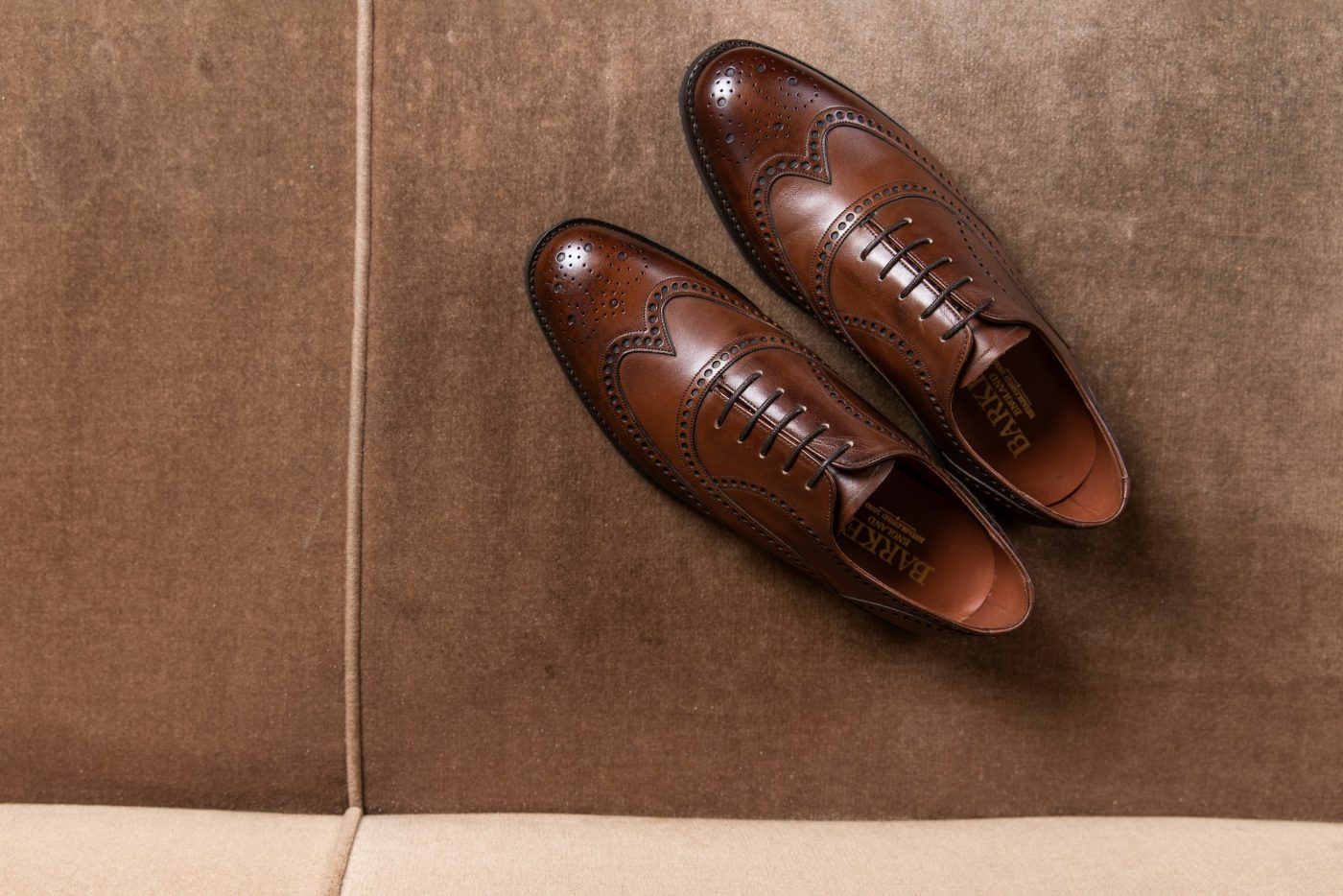
The thing people get wrong is footwear. Most refusals are about shoes, not shirts. A clean leather or suede shoe passes almost everywhere; a technical running shoe does not.
Are jeans allowed in a smart casual dress code?
In London, usually yes, if they are dark and not ripped. The rooms that ban denim say so explicitly rather than leaving it to smart casual: the Ritz bars jeans by name, and so does the afternoon tea dress code at the top of the market. Where a door says only smart casual and nothing further, dark unripped jeans with a good shoe and a collar get in.
Are trainers allowed in a smart casual dress code?
This is where the doors disagree, and the disagreement is published, so you can check rather than guess.
The Goring bans trainers by name. Tape London bans “gym, dirty or everyday trainers” but asks for smart footwear, which permits a clean leather trainer and excludes the ones you ran in. Ministry of Sound allows sports trainers outright while banning caps and football shirts, which is the opposite way round from what most people assume.
So there is no single answer, and anybody giving you one has not read the doors. The safe rule stands: a clean leather or suede shoe passes everywhere in this city, and a technical running shoe is the single most common reason people are turned away.
What is not allowed in a smart casual dress code?
Across every London door that publishes one, the same five things recur: sportswear and tracksuits, shorts, ripped denim, beachwear, and athletic trainers. Caps and football shirts appear often enough at club doors to add. Almost nothing else is named.
That is the useful shape of it. A smart casual code is a list of exclusions, not a uniform, and the exclusions are short.
The rooms that actually enforce something
Very few, and they publish it. These are quoted from the venues themselves.
The Ritz dress code, the strictest in London
For afternoon tea their wording is: gentlemen are required to wear a jacket and tie, and jeans and sportswear are not permitted for either ladies or gentlemen.
Three clarifications, because this is the most misreported dress code in the city. It does not apply to children under 16 at all, which the hotel now states plainly rather than carving out particular garments. It does not mention trainers: the ban is on jeans and sportswear, so the footwear question is decided by the room rather than by a rule. And sportswear is not permitted in any of the hotel’s restaurants or bars, wherever you are in the building. Elsewhere in the hotel it relaxes to smart casual and smart jeans are allowed, specifically at breakfast, in the Rivoli Bar, the Secret Garden and the Cigar Lounge.
They do turn people away, and the tie is not negotiable. If you are travelling light, buy or borrow one.
The Goring dress code, which bans trainers by name
No sportswear, athletic trainers, shorts or ripped jeans. That is their own list, and it is the clearest statement of smart casual any London hotel publishes.
If you want to know what smart casual means, this is the definition to use.
The Savoy dress code
Their wording is softer and worth quoting: they have no formal dress code but ask guests to dress elegantly for the occasion, with offensive attire, disruptive clothing and sports jerseys strictly prohibited.
In practice: no football shirts, and make an effort.
The Rules dress code, Covent Garden
Jacket and tie are not required, but they prefer smart dress and state plainly: no shorts or sportswear. Children under ten are not admitted to the restaurant after 7pm.
The Box dress code, Soho
Smart and elegant, enforced at the door, and this is a late club rather than a dining room so the standard is higher and the enforcement real. No trainers, no sportswear, no casual attire.
London nightclub dress codes
Clubs publish more detail than restaurants do, and the detail is frequently the opposite of what people assume.
The Ministry of Sound dress code
No tracksuits, sportswear, caps or football shirts. Sports trainers are fine. That last clause is the one nobody expects and it is their own rule: the shoes are allowed and the cap is not.
Two further rules from the same door, worth more than the clothing. Single person entry is refused outright, in their wording come with a friend or a group. And there is no re-entry at all, so stepping outside ends the night. Last entry is 3am at the weekend and 2am on Tuesday.
The Tape London dress code
Specific, and they mean it. Banned by name: “Sports/Gym wear, including designer tracksuits or leggings” and “Gym, dirty or everyday trainers/sneakers”. What they ask for is “stylish and elegant attire” with “smart and elegant footwear”.
Designer tracksuits are excluded explicitly, which closes the loophole most people try.
The Cirque le Soir dress code
The clothing matters less here than the company. Their own wording is that groups must be mixed, and all male groups may be turned away. It is the single most common reason a stag party ends up somewhere else. The age minimum also moves with the night: 19 on Monday and Wednesday, 20 on Friday and Saturday, with photo identification.
The Annabel’s dress code
Annabel’s publishes its dress code as a separate document of its own, which tells you how seriously it is taken. It is also moot for most people: it is a private members’ club with no guestlist and no table booking, and membership is by application.
The clubs page covers the rest of the door policy at each of these.
The ones that publish nothing
Worth knowing, because guides routinely invent rules for them.
The Claridge’s dress code, which does not exist
Claridge’s and the Connaught say they have no dress code. Both Maybourne hotels state it plainly, so any “smart casual required” you read about them is a listing site’s inference, not the hotel’s policy.
The Dorchester does publish one, and an earlier version of this page was wrong to say otherwise. Its own dining page answers the question with a yes: it encourages elegant attire and asks guests not to wear shorts or sportswear at afternoon tea or in the evening.
That does not mean turn up in shorts. It means the room does the work: you will feel wrong rather than be stopped. Dress for the other guests.
Where it genuinely does not matter
Almost everywhere else. London is not a formal city and the overwhelming majority of its best eating and drinking has no code whatsoever.
Pubs, including the grand Victorian ones, have none. Neither do the great majority of restaurants, the cocktail bars, or the cabaret rooms. The best pubs in London and the cocktail bars will take you as you are.
Practical notes
Check the venue’s own site, not a guide. Including this one. Codes change and only the venue’s page is authoritative.
Assume the older the room, the firmer the standard. St James’s and Mayfair hotels, yes. Soho and Shoreditch, almost never.
Bring one jacket. It converts almost any outfit into smart casual and it is the single most useful thing in a short-stay bag.
If you are unsure, ring. It is a normal question and they answer it plainly. Far better than being turned away at the door of a table you waited three months for.
Everything quoted here was taken from the venues’ own published information and rechecked on 2 October 2026.
Where to buy the clothes
- Oxford Street Twelve and a half hours a day, except Sunday, when the whole street manages six
- Harrods Open seven days, and the opposite of everything Savile Row does
- Savile Row Office hours, three fittings and a ten week wait, and only one house publishes a price
- Jermyn Street Opens on a Saturday, which the Row does not, and will sell you a shirt the same afternoon
- The best barbers in London Twenty pounds or two hundred and twenty five, and the difference is mostly time
Wimbledon is the other fortnight where what you wear is a live question, particularly on the hospitality routes, and the guide covers the five ways in now the ballot has shut.
Where to go next
Afternoon tea at the Ritz covers that dress code in full, along with the booking and cancellation terms. London’s Michelin starred restaurants notes where a jacket is expected.
If the answer to a dress code is a new jacket, Savile Row is ten minutes from most of these rooms, though the street keeps office hours and a first bespoke commission takes three visits and eight to twelve weeks. Only one house on it publishes a price.
If you need a shirt tonight rather than a suit in ten weeks, Jermyn Street is the one to walk. It opens on Saturdays, which the Row does not.
And our main London guide has the rest of a visit.
Questions we get asked
What should you wear in London?
Layers and a coat, and something a step smarter than you would wear at home for the evening. London's weather changes through the day rather than the season, so a jacket you can carry beats the right coat for the wrong hour. For the evening, the city is less formal than its reputation almost everywhere, with a short list of exceptions that publish their own rules and enforce them. A jacket is never wrong anywhere in this city.
What do you wear to the theatre in London?
Whatever you like, in almost every case. The West End has no dress code and audiences run from suits to jeans in the same row. The exceptions are the grand nights rather than the grand buildings: an opening or a gala is dressier by convention rather than by rule. Comfortable is the better instinct, because most West End seats are Victorian and narrow.
What do you wear to the opera in London?
Smarter than the theatre and less formal than the films suggest. The Royal Opera House publishes no dress code and people attend in everything from black tie to jeans, with most of the room somewhere in between. A jacket puts you comfortably in the middle. The one night to dress properly for is an opening, where the convention is real even though the rule is not.
What does smart casual actually mean in London?
It is defined by what it excludes rather than what it requires: no sportswear, no shorts, no ripped denim and no beachwear. Beyond that you have latitude. The thing people get wrong is footwear, because athletic trainers fail a door that everything else about the outfit would have cleared.
Which London restaurants have a strict dress code?
The Ritz is the strictest in London and says so plainly: gentlemen are required to wear a jacket and tie, and jeans and sportswear are not permitted for either ladies or gentlemen. The Goring is the one that bans trainers by name. Rules in Covent Garden asks for smart dress with no shorts or sportswear.
Do Claridge's and the Connaught have a dress code?
No: both say outright that they do not have one. The Dorchester, by contrast, does publish one, asking guests not to wear shorts or sportswear at afternoon tea or in the evening. None of that is permission to turn up in anything, and the safe assumption is that the older the room, the firmer the standard.
What should you do if you are not sure what to wear?
Check the venue's own site rather than a guide, because a dress code is the thing guides copy from each other and get wrong. Bring one jacket, which is never wrong anywhere in this city. And if it still matters, ring them.
Written by Robert J Wills, no. 37 in the guide.
Last checked 2 October 2026 against the venues' own published information. Nobody pays to appear here and we take no bookings.