Start with a warning, because this one could waste a journey in a way no other page on this site can. Checked on 5 October 2026, the domain walthamstowwetlands.com no longer belongs to the reserve. It now serves an online casino affiliate site. The address that for years was the obvious place to check opening times is gone, and the hours published on it are not the reserve’s.
The reserve itself is open, free, and run by London Wildlife Trust on a working Thames Water site. Here is what it actually publishes.
The two rules that decide your visit
No dogs. None at all, except trained assistance dogs on duty. This is not a preference about wildlife disturbance alone: the reservoirs are a live drinking water supply, so pets of any kind are refused. If you were planning a dog walk, plan a different one.
Last entry is 15 minutes earlier at weekends than on weekdays. Nobody expects that, because it is the wrong way round from how most places work.
The opening times in full
October to March: 9.30am to 4pm. Last entry 3.45pm on weekdays and 3.30pm at weekends.
April to September: 9.30am to 5pm. Last entry 4.45pm on weekdays and 4.30pm at weekends.
The cafe and the toilets close 30 minutes before the site does, which on a winter Saturday means the last cup of tea is at half past three.
Entry is free and no booking is needed.
Where it is, and how close the Tube is
2 Forest Road, Walthamstow, N17 9NH.
Two Underground stations, Tottenham Hale and Blackhorse Road, are each within a ten minute walk, which is unusual for 160 hectares of water and reed bed. The 123 and 230 buses stop on Forest Road, less than five minutes away on either side, and Tottenham Hale is also a mainline station with trains from central London out to East Anglia.
Paid parking is available on site, with payment details on the signage. There are four Blue Badge bays and they are free of charge.
Access
The Engine House and the main concrete path through the site are accessible for wheelchair users and anyone with walking difficulties. The Engine House has a platform lift and accessible toilets with ramp entry.
Be realistic about the rest: this is a nature reserve, and the remaining paths are dirt track, so they are uneven and muddy in places.
A path closure to check before you go
The 4 to 5 paths are closed for improvement works on the electricity pylons, and are expected to reopen by the end of October. The 1-2-3 path has reopened.
The work is part of a national upgrade of the electricity network to carry power from offshore wind farms, which is why three pylons on the site are being replaced. Signs are up at the key points, and if you reach a closure you have to return the way you came, which on a site this size is a real detour.
What it is
A fully operational Thames Water reservoir site that supplies drinking water to 3.5 million people, and at the same time an internationally important nature reserve. It opened to the public in October 2017.
It is the largest urban wetland reserve in Europe and the largest fishery in London. The protections stack up: part of the Walthamstow Reservoirs Site of Special Scientific Interest, the Lee Valley Special Protection Area, a Ramsar site of international importance, and a Site of Metropolitan Importance for Nature Conservation.
One note on the numbers, since the official sources differ. London Wildlife Trust, which runs the reserve, gives the site as 160 hectares. Waltham Forest Council gives 211. We have used the Trust’s figure because it is the body on the ground, but either way it is large enough that you should look at the map before choosing a route.
What you will see
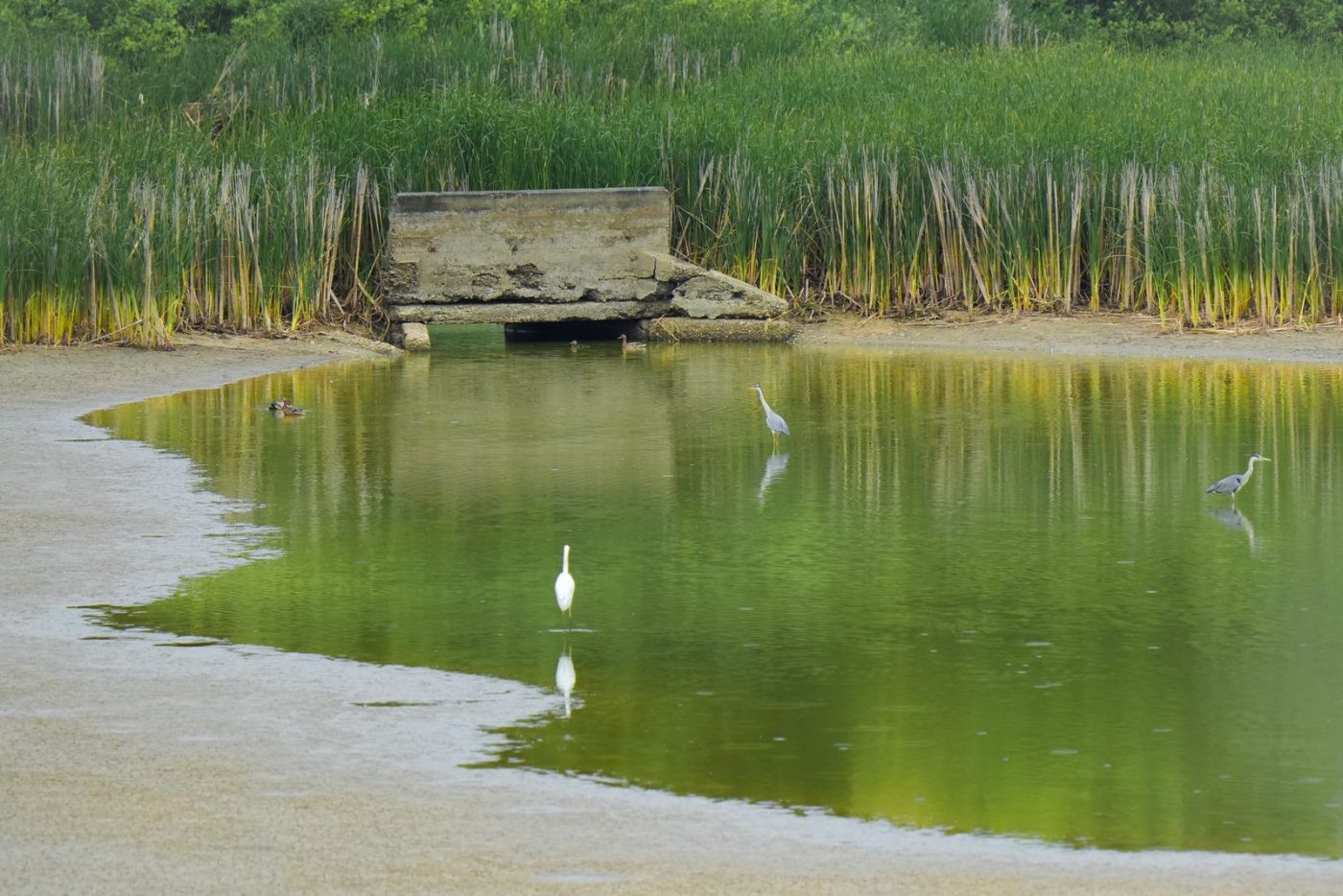
Peregrine falcons, kingfishers, little egrets, herons, great crested grebes, cormorants and shovelers, along with tufted duck, pochard, gadwall, shelduck and greylag geese. In the water, brown and rainbow trout, bream and perch. On land, hedgehogs and common toads.
There is a visitor centre in the Engine House, bird hides, a shop, a cafe and a picnic area.
The habitats run from dense scrub along sheltered banks to wide open views back toward the city, which is the thing photographs never capture: you can see the skyline from the middle of a wetland.
How to plan it
In winter, go in the morning. A 4pm close with a 3.30pm last entry at weekends leaves a short day.
Weekend: arrive by three at the latest, and earlier if you want the cafe.
With a dog: do not. Assistance dogs only, on a drinking water site.
By Tube: Blackhorse Road or Tottenham Hale, both ten minutes away, which makes this one of the easiest large reserves in the country to reach without a car.
For the rest of the city’s green space, the parks page covers the big ones and the free things to do covers what else costs nothing.
Walthamstow Wetlands
- Address
- 2 Forest Road, Walthamstow, London N17 9NH
- Nearest
- Tottenham Hale or Blackhorse Road, each within a ten minute walk. Buses 123 and 230 on Forest Road
- Hours
- October to March 9.30am to 4pm, last entry 3.45pm on weekdays and 3.30pm at weekends. April to September 9.30am to 5pm, last entry 4.45pm weekdays and 4.30pm weekends. The cafe and toilets close 30 minutes before the site
- Booking
- None needed
- Price
- Free
- Standing
- The largest urban wetland reserve in Europe, on a working Thames Water reservoir site supplying 3.5 million people, open to the public since October 2017
How to get in
No dogs except trained assistance dogs, because the reservoirs are a drinking water supply. The Engine House and main concrete path are wheelchair accessible; other paths are dirt track. Four free Blue Badge bays. The 4 to 5 paths are closed for pylon works until about the end of October.
Where to go next
The parks page covers the rest of London’s green space, and the free things to do cover what else costs nothing.
Hackney is the nearest area guide, and Chelsea Physic Garden is the walled, ticketed opposite of this.
Questions we get asked
Is Walthamstow Wetlands free?
Yes, entry is free and no booking is needed. It is run by London Wildlife Trust on a working Thames Water reservoir site.
What are Walthamstow Wetlands opening times?
October to March, 9.30am to 4pm, with last entry at 3.45pm on weekdays and 3.30pm at weekends. April to September, 9.30am to 5pm, with last entry at 4.45pm on weekdays and 4.30pm at weekends. The cafe and toilets close half an hour before the site.
Can you take dogs to Walthamstow Wetlands?
No. Only trained assistance dogs on duty are allowed. Other dogs and pets of any kind are refused, because the reservoirs are a live drinking water supply as well as a sensitive habitat.
What is the nearest station to Walthamstow Wetlands?
Tottenham Hale and Blackhorse Road are each within a ten minute walk of the entrance at 2 Forest Road, N17 9NH. The 123 and 230 buses stop on Forest Road, under five minutes away.
Is Walthamstow Wetlands wheelchair accessible?
Partly. The Engine House and the main concrete path through the site are accessible, and the Engine House has a platform lift and accessible toilets with ramp entry. The remaining paths are dirt track and can be uneven or muddy. Four Blue Badge parking bays are free of charge.
How big is Walthamstow Wetlands?
London Wildlife Trust, which runs the reserve, gives 160 hectares. Waltham Forest Council gives 211. It is the largest urban wetland reserve in Europe and the largest fishery in London either way.
Written by Robert J Wills, no. 216 in the guide.
Last checked 5 October 2026 against the venues' own published information. Nobody pays to appear here and we take no bookings.