Everyone tells you to avoid London in winter because of the rain. The Met Office’s own thirty year averages say the rain is not the problem.
Across a full year, London’s rainfall barely moves. The driest month averages 38.78mm and the wettest 66.63mm, which is a difference of less than a factor of two. London has no wet season.
What does collapse is the light. December averages 54.96 hours of sunshine and July averages 217.81. That is a factor of four, and it is the real variable nobody leads with.
Which means the honest advice is almost the opposite of the usual advice, and the best month is not the one you would guess.
The numbers
All figures below are Met Office thirty year averages for the Heathrow climate station, covering 1991 to 2020.
| Month | Sunshine (hours) | Rain (mm) | Rainy days | Max temp |
|---|---|---|---|---|
| January | 61 | 58.8 | 11.5 | 8.4C |
| February | 79 | 45.0 | 9.5 | 9.0C |
| March | 124 | 38.8 | 8.5 | 11.7C |
| April | 177 | 42.3 | 8.8 | 15.0C |
| May | 207 | 45.9 | 8.0 | 18.4C |
| June | 208 | 47.3 | 8.3 | 21.6C |
| July | 218 | 45.8 | 7.9 | 23.9C |
| August | 202 | 52.8 | 8.4 | 23.4C |
| September | 157 | 49.6 | 7.9 | 20.2C |
| October | 115 | 65.1 | 10.8 | 15.8C |
| November | 71 | 66.6 | 11.2 | 11.5C |
| December | 55 | 57.1 | 10.8 | 8.8C |
Four things in that table that contradict what you have been told
The driest month is March. Not July, not August. March averages 38.78mm, which is less than any summer month.
February is drier than June, July and August. At 44.96mm it beats June on 47.25 and comfortably beats August on 52.78. February’s reputation is entirely about cold and dark, not water.
The wettest month is November, and October is second. Autumn is the wet part of the London year, not winter and not spring.
It rains on about 112 days a year, which is fewer than one day in three. Even in the worst month, January, the average is 11.5 days of meaningful rain out of 31.
So what actually changes
Sunshine, by a factor of four. December’s 54.96 hours across 31 days works out at one hour and forty six minutes of sunshine a day. July’s 217.81 hours is just over seven hours a day.
That is what a London winter actually is. Not wet. Dark. The afternoon is over before you have finished lunch, and every outdoor plan on your list has to fit between a sunrise around eight and a sunset before four.
The best months, on the evidence
May, which is the one people miss
207 hours of sunshine, level with June and only eleven short of July, with less rain than June or August and only eight rainy days. It also falls outside the school summer holidays, so the city is cheaper and emptier than it will be six weeks later. If you want one answer, this is it.
September, the other one
157 hours of sunshine and, alongside July, the joint fewest rainy days of the year at 7.9. Temperatures still averaging 20C. The schools have gone back, so the crowds have thinned while the weather has not yet turned.
July, if you want the light
The sunniest and the joint driest by rainy days. The trade is that it is also the most crowded and the most expensive, because it is inside the school holidays, and London’s older buildings and its Underground handle heat badly.
March, if you are here to eat
The driest month of the year, 124 hours of sunshine, and low season prices. Cold at 11.7C but genuinely dry. If your trip is restaurants, bars and galleries rather than parks, March is underrated and cheap.
The months to think twice about
November. The wettest month and only 71 hours of sunshine. It has the Christmas lights going up towards the end, which is the one thing in its favour.
December, unless Christmas is the point. Fifty five hours of sunshine is the floor of the year. If you are coming for the season itself that is a fair trade, and our Christmas guide covers what is actually open, including the fact that on the 25th there is no public transport at all.
August. Wetter than June, July, May, April, March and February, more crowded than all of them, and the month when a good number of London restaurants close for their own holidays.
What matters more than the weather
School holidays, which move prices more than any other factor. Late July through August, the fortnight around Christmas, and the late May and late October half terms. Hotel rates and attraction queues both jump. Term dates vary between councils, so check the specific dates for the year you are travelling.
Daylight, for anything outdoors. The best views in London are mostly free and mostly outdoors, and in December you have until about four in the afternoon to use them. Horizon 22 closes at four on a Sunday for exactly that reason.
What you are here for. A trip built on restaurants, galleries and bars is close to weather proof, and those are cheapest in January, February and March. A trip built on parks, markets and river walks is not.
Practical notes
Bring a coat, not an umbrella. On the evidence, you will meet rain on roughly a third of days in winter and a quarter in summer, and it is usually not heavy. A hood beats carrying something.
Book the outdoor things first and early in the day in winter. In December the sun rises around eight and sets before four, so you are working with under eight hours of daylight.
If it does rain, it is not a lost day. What to do in London when it rains covers the indoor half of the city, and the free museums are the backbone of it.
All climate figures here are Met Office thirty year averages for the Heathrow station, 1991 to 2020, read in September 2026 and rechecked against the Met Office’s Heathrow station record on 28 September 2026. They are averages, not forecasts, and any individual week can do whatever it likes.
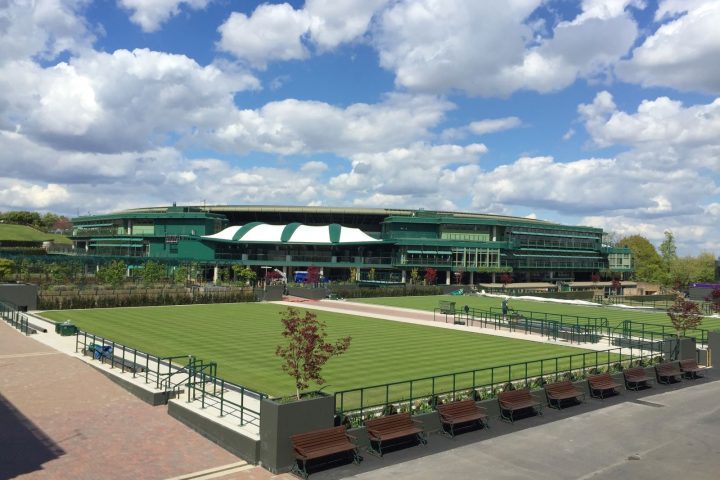
Wimbledon runs 28 June to 11 July in 2027, its 150th year, which makes that fortnight the busiest and dearest of the London summer. The ballot has already closed, but a returned Centre Court seat still costs £15.
Where to go next
What to do in London when it rains and the free museums cover the indoor half of the city, which is what makes a winter trip work.
For the seasons themselves: Christmas in London, New Year’s Eve and the Christmas markets.
For the outdoor half: the parks and the best views in London. Once you have picked your dates, where to stay.
Questions we get asked
What is the best month to visit London?
May, on the Met Office’s own thirty year averages. It gets 207 hours of sunshine, level with June and only eleven short of July, with less rain than June or August, only eight rainy days, and it sits outside the school summer holidays so prices and crowds are lower. September is the close second, with the joint fewest rainy days of the year.
What is the rainiest month in London?
November, at 66.6mm, with October second at 65.1mm. Autumn is the wet part of the London year, not winter. The driest month is March at 38.8mm, which is drier than any month of the summer, and February at 45.0mm is drier than June, July and August.
Does it rain a lot in London?
Less than the reputation, and much more evenly than people expect. London averages about 112 days a year with 1mm of rain or more, which is fewer than one day in three. The gap between the driest month and the wettest is less than a factor of two, so there is no wet season to avoid.
Is it worth visiting London in winter?
Yes if your trip is restaurants, galleries, bars and shops, because those are weather proof and winter is the cheap season. The real cost is light rather than rain: December averages 55 hours of sunshine across the month, which is one hour and forty six minutes a day, so anything outdoors has to happen in a short afternoon window.
When is the cheapest time to visit London?
January, February and March, which sit outside every school holiday and before the spring. March is also the driest month of the year on the thirty year averages, so it combines low season prices with the lowest rainfall, which is an unusual pairing. Avoid the late May and late October half terms and the fortnight around Christmas.
How cold does London get?
Milder than most people expect. The coldest month by average daily maximum is January at 8.4C, with December at 8.8C and February at 9.0C. Average overnight minimums in those months sit between 2.6C and 3.1C. Heathrow averages about 27 days of air frost a year across the whole year.
Is August a good time to visit London?
It is the weakest of the summer months on the data. August is wetter than June, July, May, April, March and February at 52.8mm, gets less sunshine than May, June or July, and falls inside the school holidays so it is the most crowded and most expensive stretch of the year. A number of London restaurants also close for their own holidays.
Written by Robert J Wills, no. 101 in the guide.
Last checked 28 September 2026 against the venues' own published information. Nobody pays to appear here and we take no bookings.